Accueil » Destinations » Ireland
Surfing in Ireland: spots, season and travel tips
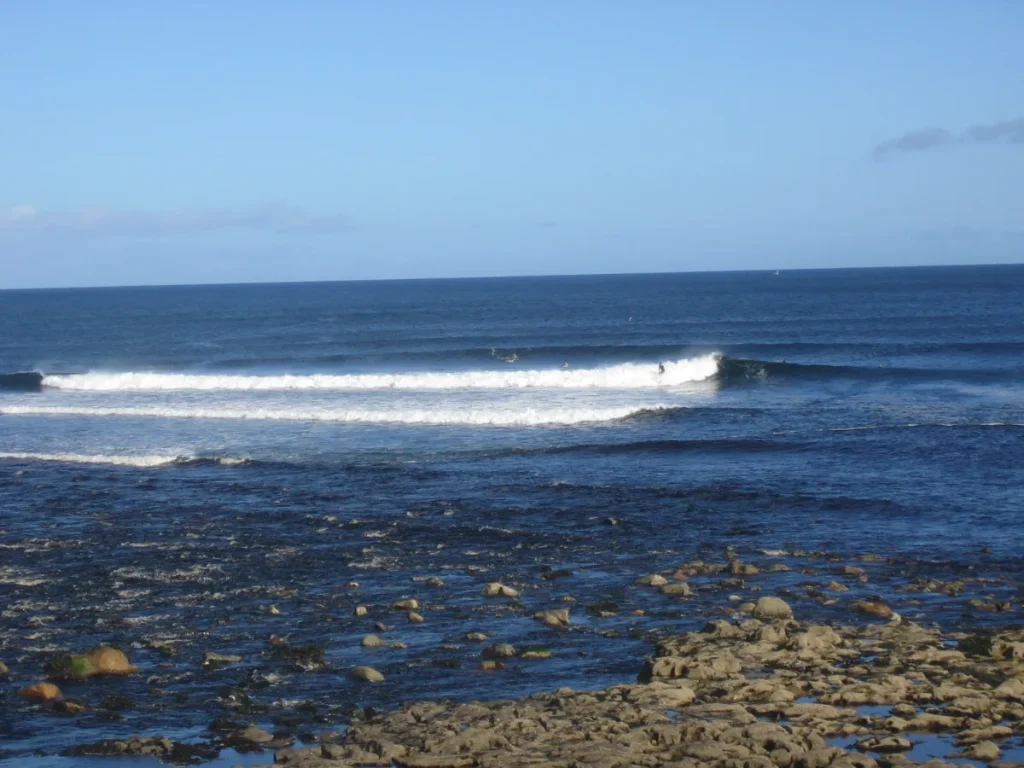
Ireland takes the full force of North Atlantic swells. Its west coast, from Donegal to Kerry, has beaches to learn on, reefs to progress and a few giant waves for the very best. The water is cold all year, but the spots are varied and the scenery is stunning.
In this guide you will find everything to plan your trip: spots by region and level, the season, the wetsuit by month, 2026 entry rules, safety and costs.
Ireland surf at a glance
| Level | All levels: Rossnowlagh, Strandhill, Lahinch and Inch to learn, Easkey to progress, The Peak in Bundoran for advanced surfers |
| Best season | Autumn to winter for the big swells, for experienced surfers only. Late spring and summer to learn, with smaller waves. Spring and autumn for intermediates |
| Water temperature | About 8°C in February and March, 16 to 17°C in August |
| Wetsuit | All year: 4/3 in summer, 5/4 with boots, gloves and hood in winter |
| Entry | Ireland is in the EU but not in Schengen. UK citizens travel under the Common Travel Area, but carriers usually ask for photo ID or a passport |
| Getting there | Direct flights to Dublin and Shannon, or ferries from France (Cherbourg, Roscoff) |
Why surf Ireland
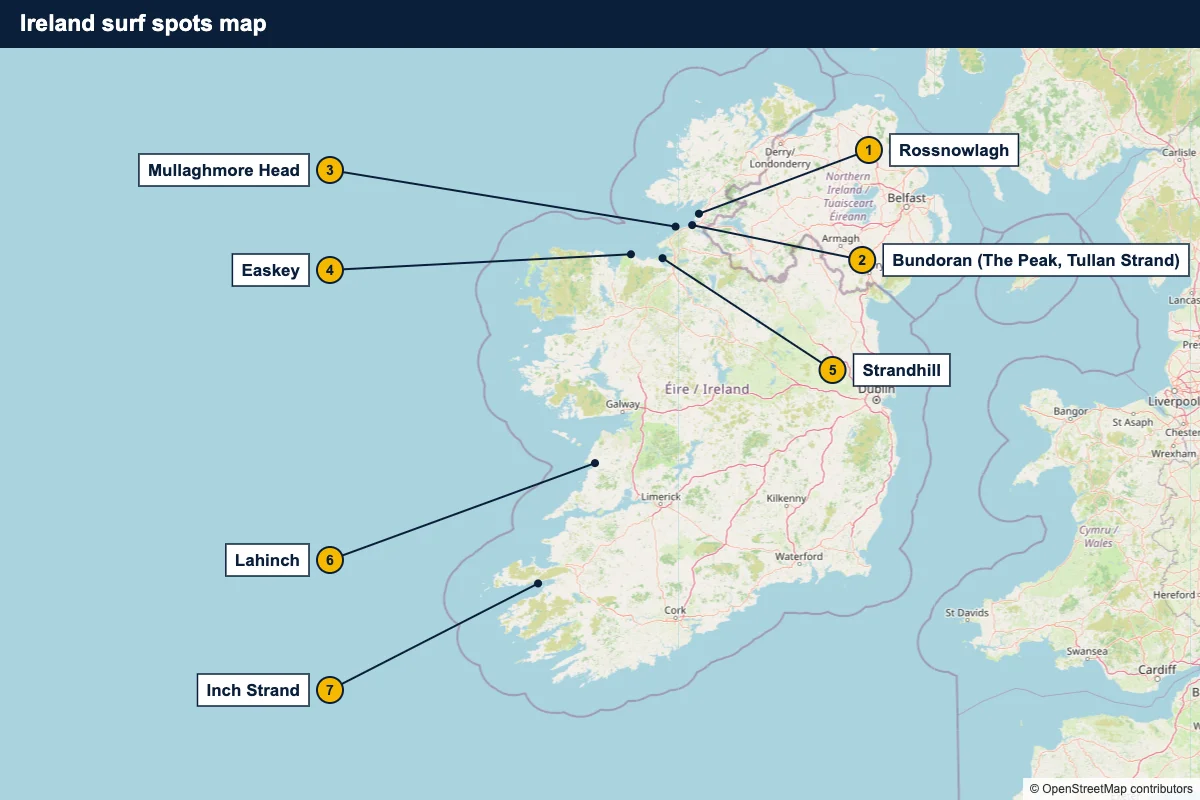
Facing the North Atlantic, Ireland’s west coast gets swell almost all year. In Donegal, Bundoran combines a famous reef, The Peak, with beaches to learn on such as Tullan Strand and Rossnowlagh: it is all covered in our guide to surfing Bundoran and Donegal.
Further south, Sligo has Strandhill beach and the Easkey reefs, Clare has Lahinch beach and Kerry the long beach at Inch. For big-wave surfers, Mullaghmore Head, the giant wave of Sligo, is mostly surfed with tow-in.
Where to stay for surfing in Ireland
For a first surf trip, pick a surf town on the west coast and explore around it by car. The prevailing wind blows from the west and southwest, often onshore: having several spots within reach helps you find a sheltered coast.
Choosing your region by level
- Donegal (Bundoran): all levels, with Tullan Strand and Rossnowlagh to learn and The Peak for advanced surfers.
- Sligo: Strandhill beach, for beginners on small days, and the Easkey reefs to progress.
- Clare: Lahinch beach, ideal to learn, lifeguarded in summer.
- Kerry: the long beach at Inch, for beginners and longboarders.
Do you run a surf camp or surf school in Ireland?
Present your school to readers planning a surf trip to Ireland.
List my surf campWhen to go surfing in Ireland
You can surf Ireland all year. The season mostly decides the size of the waves and the level you need.
Autumn and winter: the big swells
From autumn to winter, North Atlantic swells are at their most powerful. It is the season for experienced surfers, on the reefs and points. The water drops to 8°C in February and March: bring a 5/4, boots, gloves and a hood.
Spring and summer: the season to learn
Waves are smaller and the wind lighter: the best time for beginners. Spring and autumn are a good compromise for intermediates. The water reaches 16 or 17°C in August: a 4/3 is enough.
Sligo weather month by month
Average maximum air temperatures in Sligo and sea temperatures on the west coast (Sligo and Bundoran).
| Month | Air (maximum) | Sea |
|---|---|---|
| January | 7 to 8°C | 8 to 9°C |
| February | 7 to 8°C | 8°C |
| March | 9 to 10°C | 8°C |
| April | 12 to 13°C | 9°C |
| May | 14 to 15°C | 11 to 12°C |
| June | 16 to 17°C | 13 to 14°C |
| July | 17 to 18°C | 14 to 16°C |
| August | 17 to 18°C | 16 to 17°C |
| September | 16°C | 14 to 16°C |
| October | 13 to 14°C | 13°C |
| November | 9 to 10°C | 11 to 12°C |
| December | 8°C | 10°C |
Surfing Ireland: practical info
Surfing
- Level: All levels
- Wave type: Beach breaks, reefs and a few giant waves
- Bottom: Sand on the beaches, rock on the reefs
- When to go: All year
- Best period: Autumn and winter for experienced surfers, late spring and summer to learn
- Water temperature: 8 to 17°C depending on the month
- Gear: Wetsuit all year: 4/3 in summer, 5/4 with boots, gloves and hood in winter
- Popular spots: Bundoran, Tullan Strand, Rossnowlagh, Strandhill, Easkey, Lahinch
Before you leave
- Time difference: Same time as the UK, one hour behind France
- Flights: Direct flights to Dublin from many European cities, and to Shannon for Clare. From Paris, Dublin is about 1 h 50
- Ferries: From France: Irish Ferries Cherbourg – Dublin, Brittany Ferries Cherbourg – Rosslare and Roscoff – Cork depending on the season
- Documents: UK citizens: Common Travel Area, no passport required by law, but airlines and ferries usually ask for photo ID or a passport. Ireland is not in Schengen
- Safety: Currents on most beaches, cold water all year. Lifeguarded beaches are mainly covered from June to August
- Insurance: Recommended, including medical and surf cover
On site
- Languages: English and Irish
- Currency: Euro
- Getting around: A car is recommended to move between spots. Drive on the left
- Emergencies: 112 or 999, ask for the Coast Guard
The best surf spots in Ireland
The spots are on the west coast: Donegal around Bundoran, Sligo (Strandhill, Easkey, Mullaghmore), Clare around Lahinch and Kerry with Inch. The offshore wind changes by region: east to southeast in Donegal, southeast at Strandhill, south at Easkey, east in Clare.
Ireland surf spots for beginners
| Spot | Region | The wave | Swell and wind |
|---|---|---|---|
| Rossnowlagh | Donegal | Left and right beach break, usually quiet | West swell, east offshore wind |
| Tullan Strand | Donegal (Bundoran) | Beach break, current along the cliffs, no lifeguards | West to northwest swell, east to southeast wind |
| Strandhill | Sligo | Left and right beach break, on small days | West to northwest swell, southeast wind |
| Lahinch | Clare | Left and right beach break, lifeguarded in summer | East offshore wind |
| Inch Strand | Kerry | Long beach for beginners and longboarders | Southwest swell, east to northeast wind |
Ireland surf spots for intermediates
| Spot | Region | The wave | Swell and wind |
|---|---|---|---|
| Easkey (left) | Sligo | Left over rock reef, holds a southwest wind | South offshore wind |
| Easkey (right) | Sligo | Right over a rock ledge, sharp rock | West to northwest swell |
| Tullan Strand | Donegal (Bundoran) | Faster waves near the cliffs | West to northwest swell |
Ireland surf spots for advanced surfers
| Spot | Region | The wave | Swell and wind |
|---|---|---|---|
| The Peak | Donegal (Bundoran) | Peak over a rock ledge, longer left and hollower right | West swell, southeast wind, low to mid tide |
| Mullaghmore Head | Sligo | Giant left over reef, mostly tow-in, experts only | Big winter swells |
| Aileens | Clare (Cliffs of Moher) | Big-wave reef below the cliffs | Experts only |
Ireland surf forecast
Wind, gusts and Windguru rating over 7 days in Bundoran:
For other spots: Windguru Strandhill, Windguru Lahinch and Windguru Rossnowlagh.
SURFER REVIEWS in Ireland
Have you surfed Ireland? Share your experience. Your review will help surfers of your level plan their trip.
Ireland: safety for surfers
In the water
The water is cold all year and cold-water shock is real: never go out without the right wetsuit. Beaches have currents, such as along the cliffs at Tullan Strand. If you are caught in a rip, do not fight it: swim parallel to the beach. Lifeguarded beaches (Bundoran, Lahinch, Spanish Point, Enniscrone) are mainly covered from June to August. Mullaghmore Head is for experts only, often with tow-in.
On land
Drive on the left and take care on the small coastal roads. In a sea emergency, call 112 or 999 and ask for the Coast Guard.
What to do in Ireland besides surfing
On flat days, the west coast has plenty to offer:
- The Wild Atlantic Way: the coastal route from Malin Head in Donegal to Kinsale in County Cork.
- The Cliffs of Moher: up to 214 m above the Atlantic, near Lahinch.
- Slieve League: the Donegal sea cliffs, rising to 601 m.
- Benbulben: Sligo’s flat-topped mountain, linked to the poet Yeats.
- The Aran Islands: Inis Mór, Inis Meáin and Inis Oírr, with the cliff-top fort of Dún Aonghasa.
- Connemara National Park: in Letterfrack, free entry.
All guided activities in Ireland
Budget for a surf trip to Ireland
Rough on-the-ground costs (excluding travel):
- Group surf lesson: about €50 to €60 for 2 to 2.5 hours, in Bundoran or Strandhill
- Car: recommended to move between spots
Travel is the biggest cost. For board bag fees, read our guide to travelling with a surfboard.
FAQ: surfing in Ireland
When is the best time to surf in Ireland?
Autumn to winter for the big swells, for experienced surfers only. Late spring to summer to learn. Spring and autumn suit intermediates well.
What are the best surf spots in Ireland?
Bundoran and its surroundings in Donegal (The Peak, Tullan Strand, Rossnowlagh), Strandhill and Easkey in Sligo, Lahinch in Clare and Inch in Kerry.
Is the water cold for surfing in Ireland?
Yes: about 8°C in February and March, 16 to 17°C in August. You need a wetsuit all year, a 5/4 with boots, gloves and hood in winter.
Can you learn to surf in Ireland?
Yes, on the beaches at Rossnowlagh, Strandhill, Lahinch or Inch, ideally from late spring to summer. A group lesson costs about €50 to €60.
Can you surf in Ireland all year?
Yes, with the right wetsuit. Winter brings the biggest swells for experienced surfers, summer the smaller waves to learn.
Do UK citizens need a passport for Ireland?
Not by law, thanks to the Common Travel Area, but airlines and ferries usually ask for photo ID or a passport.
Is surfing in Ireland dangerous?
The main risks are cold water, currents on the beaches and rock on the reefs. Lifeguarded beaches are mainly covered from June to August. Mullaghmore Head is for experts only.
More surf destinations in Europe
Information may change. This guide is for general guidance only: surf conditions, temperatures, access, opening hours and prices can change. Before your trip and every session, check the forecast, local conditions and information from local providers. A spot description and its suggested level are no guarantee of safety: always match your session to your level and the conditions on the day. Learn more
Updated October 2026
Sources: Surfline, Surfline Strandhill, Surfline Lahinch, Surfnerd, Surf-forecast, mondo.surf, Discover Ireland, The Surf Atlas, Surfertoday, Wikipedia, Outsider, Seatemperatu.re, Weather2Travel, Weather Spark, Water Safety Ireland, RNLI, Gov.uk, Brittany Ferries, Irish Ferries, Cliffs of Moher. Map: © OpenStreetMap contributors.