


Torn between the cold and your craving to learn in mellow waves? This guide reveals the best surf spots in France and under the sun, perfect for beginners and intermediates. Whether you want to embrace the winter chill or chase the sun, you’ll find the right place to ride. If you dream of surfing without summer crowds, the Landes region awaits with gentle waves and empty beaches, while Morocco and the Canary Islands promise warmth and consistent surf. Discover destinations where the waves are as soft as your desire to improve, whether you’re zipping up a 5/4 wetsuit or pulling on a boardshort, your next wave is waiting. For winter sun without leaving Europe, check out our guide to the best surf camps in Tenerife.
- Winter’s coming and you’re itching to surf? Here’s where to go
- Option 1: surfing through the chill in France
- Option 2: chase the sun to surf in winter, a few hours away
- Option 3: pure tropics, surf in a boardshort
- The recap to help you choose your winter surf destination
- FAQ
Winter’s coming and you’re itching to surf? Here’s where to go
Who said surfing was only for summer? I still remember an incredible session in Lacanau under a grey sky. Perfect waves, not a soul around. Winter isn’t the end of surfing; it’s a new season altogether. Fewer people, cleaner waves, a different energy. Sure, the water’s cold, but your motivation burns brighter than ever.
You’ve got two options: stay in France and embrace authentic cold-water sessions, or fly off to surf in the sun. In France, the Landes and Brittany hide great beginner-friendly spots with calmer winter waves. Or head to Morocco, the Canaries or Guadeloupe, where you’ll find warmer water, consistent swells and easy-going surf camps. You can also check our guides to surfing in December, January or February.

Option 1: surfing through the chill in France
The gear: your anti-cold armor for magical sessions
You don’t need to be a penguin to surf in winter. With the right equipment, you’ll stay warm and comfortable. Here’s your basic setup:
- A 5/4 mm wetsuit : 5 mm on the chest and 4 mm on the limbs, perfect for 7–12°C. The neoprene keeps the cold out while letting you move freely.
- 4 mm booties: they’ll keep your feet from freezing and give you better grip.
- 3 to 5 mm gloves: for a smooth grip and to fight off the wind.
- A hood: 80% of your body heat escapes through your head, and it also protects your ears. “Personally, I don’t love wearing one, but when the wind picks up, it’s a lifesaver.”
The Landes and the Basque Country: your winter playground
Endless beaches, golden light, and a calm atmosphere, summer’s gone, and that’s a good thing. In winter, these spots become something special.
- No crowds: Just you, your board, and the ocean. Time to progress in peace.
- Well-formed waves: Winter swells, channeled by sandbanks, produce clean waves. At Santocha, I saw 1.5m right-handers perfect for intermediate surfers.
- Safe beach breaks: All sand, no reefs, perfect for learning in a thick wetsuit.
Aim for incoming tides and offshore wind days for well-defined waves. For surf spots, head south of the Landes region (like La Sud d’Hossegor or Le Prévent) or the Basque Country (Hendaye). There, you’ll avoid big swells and overcrowded areas. Ready to brave the cold? One tip: check for rip currents. This current flowing out to sea can be surprising, even in winter.
All the spots are in our guide to surfing in France.

Option 2: chase the sun to surf in winter, a few hours away
Morocco: Warm waves and mellow vibes
Taghazout rolling waves and mint tea by the ocean. Morocco blends easy waves, warm people, and a total sense of escape.
Why it rocks:
- Variety of spots: Banana Beach and Panorama for beginners, Hash Point for intermediates chasing long rides.
- Consistent swell: From September to May, the Atlantic delivers. Even in peak season (Dec–Jan), there are mellow 1.5–3m waves.
- Affordable: Surf camps from €30 ($33)–60/night, tajines for €5 ($5).
Comfortable water: 17–19°C, a 3/2 mm wetsuit is enough. Morocco is adventure made easy. To find where to surf in Morocco for your level, read our guide. There is also a page dedicated to surfing in Taghazout.
“I loved surfing in Imsouane. Even though the wave gets crowded in winter, it’s so long that it’s great for learning. And the instructors there are amazing.” To plan your stay, read our guide to surfing in Imsouane.
To pick where to stay, compare the best surf camps in Imsouane and the surf camps in Essaouira.
The Canary Islands: Europe’s endless spring
Europe’s tropics. Fuerteventura, the “Hawaii of the Atlantic”, offers waves for all levels, framed by volcanic landscapes. The spots are detailed in our guide to surfing in Fuerteventura.
Why go:
- El Cotillo: Long sandy beach with soft rollers and forgiving A-frames.
- Flag Beach: Calm waves, gentle winds, 20°C water, surf in a 3/2 or even a shorty.
- Close & convenient: 4h from Paris, no jet lag. Land, unpack, and surf.
Sandy bottoms, friendly swells, and 300 days of sunshine. It’s the perfect winter escape. Don’t forget tropical wax, it gets hot out there! Surf camps run all winter, which makes it the easiest choice for a first winter surf camp.
In Lanzarote, Famara beach is a wide bay surrounded by volcanic cliffs. The water is around 20°C in winter, a 3/2 mm is enough. “A perfect wave for learning, and the setting in Lanzarote is simply stunning. I lived in the village of Famara for 3 months and it’s different from anywhere else I’ve been. You feel cut off from the world.” Everything is in our guides to surfing in Famara and surfing in Lanzarote, and you can compare the surf camps in Lanzarote.

In Tenerife, winter is the best season: swells are consistent and the water drops to around 19°C, with a 3/2 mm recommended from November to March. If you’re a beginner, stay on the south coast, around Las Américas. To find where to surf in Tenerife, all the spots are in our guide.

Cape Verde and Senegal: the sun about 6 hours away from Paris
In Cape Verde, the season runs from December to March. The water is 22-23°C, a 2/2 mm wetsuit is enough. It’s also the time of the most powerful swells: winter suits intermediate surfers best, and beginners are better off going in spring. Sal and Boa Vista are the easiest islands to reach. More in our guide to surfing in Cape Verde.
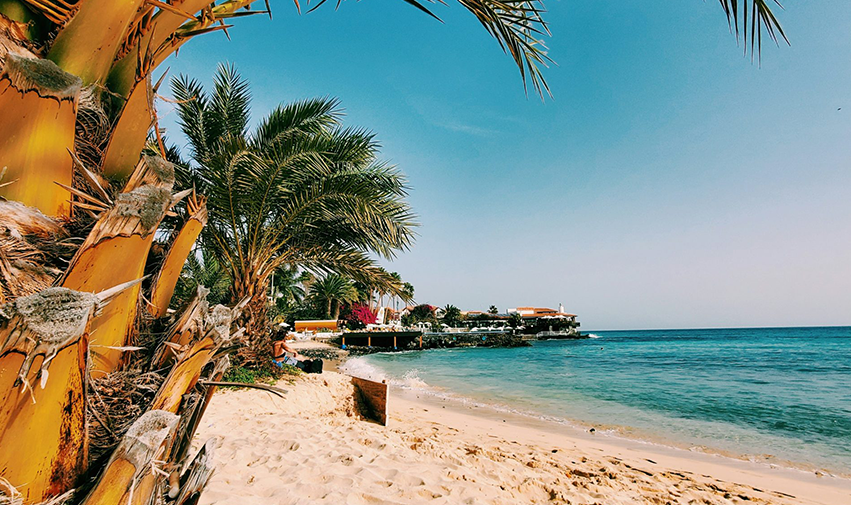
In Senegal, the season runs from November to March, when North Atlantic swells reach the coast. The water stays between 22 and 27°C depending on the month, and you’ll often surf in a shorty. It’s the most consistent season for intermediates. More in our guide to surfing in Senegal.

Option 3: pure tropics, surf in a boardshort
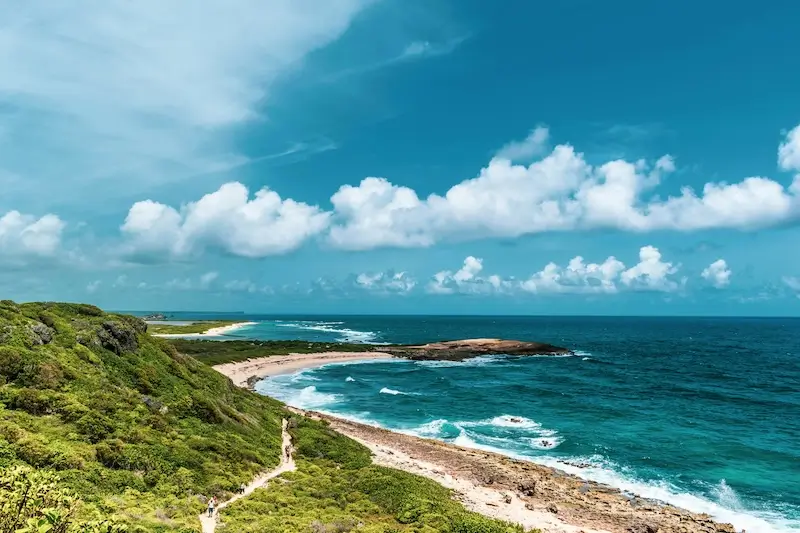
Guadeloupe: easy surf under the palms
Picture mellow waves, 29°C water, and sunsets that erase all worries. Guadeloupe is a tropical surf dream, no wetsuit required.
Spots like Le Helleux (Sainte-Anne) and Les Rouleaux (Saint-François) are mellow and welcoming, with sandy bottoms and friendly locals. Perfect for learning even if your stance still screams “penguin.”
Costa Rica: tropical jungle and perfect waves
Imagine catching a wave at sunrise while howler monkeys echo through the rainforest. Costa Rica is every surfer’s dream: warm water, consistent surf and a laid-back rhythm of life. Tamarindo, Nosara and Santa Teresa are ideal for all levels, while Playa Hermosa and Pavones challenge those looking for more power. Pavones even has one of the world’s longest lefts.
No wetsuit needed, just the “pura vida” attitude. Between sessions, you can explore the jungle, swim under waterfalls or nap in a hammock by the sea. To get started, read our guide to surfing in Tamarindo.

Sri Lanka: peak season on the south coast
In winter, it’s peak season on Sri Lanka’s south coast. Weligama is ideal for beginners: a large sheltered bay with soft, regular waves. Midigama, right next door, suits intermediates better, and Hikkaduwa is livelier. The water is 27-28°C, so a rash vest is all you need. Between sessions, ancient temples, tea plantations and curries complete the trip. All the spots are in our guides to surfing in Sri Lanka and surfing in Weligama.

The recap to help you choose your winter surf destination
| Destination | Water in winter | Wetsuit | Best for |
|---|---|---|---|
| France (Landes, Basque Country) | Cold | 5/4 mm, booties, gloves | Motivated beginners, intermediates |
| Morocco | 17-19°C | 3/2 mm | Beginners and intermediates |
| Canary Islands | 19-20°C | 3/2 mm | All levels |
| Cape Verde | 22-23°C | 2/2 mm | Intermediates |
| Senegal | 22-27°C | Shorty | Intermediates |
| Guadeloupe | 29°C | None | Beginners and intermediates |
| Costa Rica | Warm all year | None | Beginners and intermediates |
| Sri Lanka | 27-28°C | Rash vest | Beginners and intermediates |
Surfing in winter is the perfect opportunity to try out different spots. Each destination has its own unique character: Landes or Guadeloupe.
- Budget: Morocco = controlled budget.
- Cold weather: Wetsuit or boardshorts?
- Duration: Weekend or two weeks?
Choose based on your budget, how much cold you can take and how much time you have: a weekend in the Landes, a week in Morocco or the Canaries, two weeks for the tropics.
It’s better to wax your board than to struggle at the airport. Travel with peace of mind with proper surf travel insurance.
FAQ
Absolutely. Winter means consistent waves, fewer crowds and a raw, peaceful atmosphere. France’s Atlantic coast shines in this season. If you’d rather chase the sun, Morocco, the Canaries and Guadeloupe offer warm, beginner-friendly surf. Equip yourself properly and choose spots suited to your level
For your first waves, choose easy and safe spots. In France, the beaches of the Landes or the Basque Country are ideal in winter: fewer crowds, gentle waves, and an atmosphere that boosts motivation. If you prefer sunshine, Morocco and the Canary Islands are safe choices for beginners. Spots like Imsouane (Morocco) or El Cotillo (Canary Islands) offer slow waves, perfect for learning to balance. And for those who are more sensitive to the cold, Guadeloupe or Costa Rica allow you to surf in boardshorts without sacrificing comfort! Our complete guide for beginner surfers is also available.
No worries, with the right gear, you’ll stay warm! In France, a 5/4mm full wetsuit is essential. Add 4 or 5mm booties, gloves, and a hood to keep the cold out. In warmer waters like those in Morocco (17-19°C), a 3/2mm wetsuit is enough. And for tropical destinations, forget the layers: boardshorts or a bikini, and you’re all set for sunny sessions!
Timing is crucial! In France, prefer the tides going in and the days with a wind from land (offshore), for more gentle waves. In summer, as in the Canary Islands or Guadeloupe, low tides or mid-tides are ideal for stable conditions. And no matter the destination, start with small waves: that’s where you gain confidence. Would you like some advice? Regarde les prévisions de surf et choisis des jours avec une houle modérée, entre 0,6 et 1 mètre.
Progress takes time. Check your board size — too small can hold you back. Watch the waves carefully, time your take-off, and stay relaxed. Regular sessions are key, even just a couple of hours a week. A local surf coach or a video of your session can help you make a breakthrough.
