Accueil » Destinations » Surfing in Portugal
Surfing in Portugal: the best spots by level and season
Dreaming of surfing the Atlantic but lost when it comes to planning? Surfing in Portugal, with around 1,800 km of coastline (islands included) and waves for every level, calls for a clear guide to avoid disappointment.
This guide takes you from the barrels of Ericeira to the giants of Nazaré, via the hidden corners of the Algarve.
Discover the best seasons, the must-surf spots and our tips for surfing with peace of mind. Beginner or experienced, this country offers an unmatched adventure, in a unique setting where the ocean and local culture blend beautifully.
Still hesitating between Portugal and France? Check out our guide to the best surf spots in France to compare the sandbanks of the Landes with the Portuguese reefs.
Why surf in Portugal?
A welcoming land for every surfer
Head to Portugal, where the Atlantic unleashes its power to offer a unique adventure every session.
With more than 900 km of mainland coastline, every corner hides a little gem: from family beaches to the giant waves of Nazaré, via the barrels of Ericeira.
Here, Atlantic swells hit hard, and the mild climate lets you surf all year round, even if autumn remains the magic season. You’ll quickly understand why European surfers come back every year: the waves are varied, the spots are countless and the vibe is friendly. Locals always welcome you with a coffee or a smile, even when they’re flying down a perfect right.
No wonder the country invests in surfing, with projects like Surfers Cove, an artificial wave lagoon in Óbidos.
Beginner or pro, Portugal has what it takes to surprise you. Ready to explore its waves?
Also check out our guide on when to go surfing in Madeira.
When to go surfing in Portugal?
Autumn (September to November) offers the best conditions: North Atlantic swells, offshore winds and waves for everyone.
Winter (December to February) is for seasoned surfers. Powerful waves, but storms are possible: avoid stormy days if you’re an intermediate.
Spring (March to May) stays easy-going: smaller but consistent waves.
In summer (June to August), beginners love the mellow waves, but the wind can spoil everything.
Personally, I prefer early mornings.
The key? The water is cool: 14°C in the north in winter, 22°C in the south in summer. A 3/2 is enough in summer, a 4/3 in winter.
| Region | Best season | Level | Flagship spot | Water (°C) |
|---|---|---|---|---|
| Algarve | All year | Beginner + | Sagres / Amado | 17° - 22° |
| Ericeira | Sept - May | Intermediate / Expert | Ribeira d'Ilhas | 15° - 19° |
| Peniche | Sept - Nov | All levels | Supertubos / Baleal | 15° - 20° |
| Nazaré | Oct - March | Spectators | Praia do Norte | 14° - 17° |
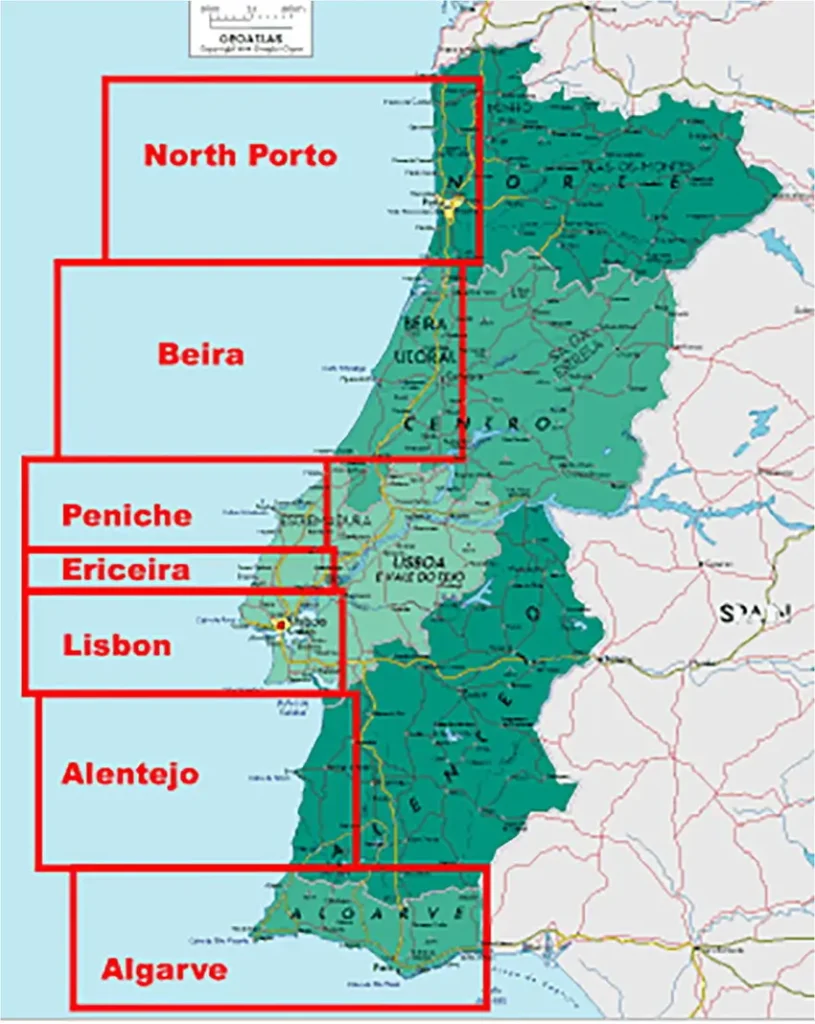
The best surf spots in Portugal, region by region
The Algarve: the many-sided south
The Algarve, with its golden cliffs and secret coves, delivers waves for every level. At Sagres, the peninsula picks up swells on both sides, offering varied waves. Sagres, Tonel and Beliche are family-friendly beach breaks, but watch out in winter: the waves can top 1.8 m! For beginners, Praia do Amado remains a safe choice even when the Atlantic gets angry. Don’t miss Arrifana, a picturesque spot nestled in a valley. Its waves, smaller in summer, become a refuge when the other spots get too big. Wild camping is popular there but forbidden: under recent coastal protection laws, it is heavily fined. Use the dedicated areas to avoid fines of up to €600.
The Lisbon area: city surfing
At Carcavelos, 20 km from Lisbon, the city and the waves live in harmony. This hollow beach break throws powerful barrels at low tide. In summer, beginners practise there, but in winter, 2.5-metre lefts draw the experts. For a calmer surf, the neighbouring spots offer slower, smoother waves. Heading west, the coast of Cascais shows another side of Lisbon surfing. The vibe is more relaxed, and spots like Guincho let you surf in a more natural setting while staying close to the city. Cascais strikes an ideal balance between city life, variety of waves and quality of life, perfect if you want to surf without giving up urban comfort.
The Centre: Ericeira, Peniche and the giants of Nazaré
Ericeira, Europe’s first World Surfing Reserve, has around 60 spots. Ribeira d’Ilhas, just north of Ericeira, is a right-hand reef break for intermediates and more experienced surfers. Beginners head further south to Praia do Sul or the beach of Foz do Lizandro. The pros battle it out at Pontinha, a steeper spot. For barrel lovers, Coxos and Pedra Branca save their fury for experienced surfers. In Peniche, Supertubos is the epicentre of the world tour event in October. The waves, hollowed out by the east wind, challenge even the best. Further north, Praia d’el Rei attracts hunters of rare swells: a spot that works when the others are flat. Nazaré is the legendary spot… to watch! The giant waves, shaped by the deepest underwater canyon in Europe, hold world records: in October 2020, Sebastian Steudtner surfed a 26.21-metre wave there. Between October and March, the biggest swells of the season roll in, while the locals, used to their power, tell stories of storms and “man-eating” waves.
Discover the best surf camps in Ericeira.
The North: from big waves to waves for all
Northern Portugal, often underrated, hides forgotten gems. At Matosinhos, near Porto, the big winter swells draw experts. Cabedelo, a surprising point break, peels off endless rights when the winds line up. In December, a 4/3 mm wetsuit is essential. This often overlooked north offers a raw escape, where the slow rhythm of the waves leaves room for reflection between two sets.
The best spots to learn with confidence
Surfing in Sagres
The Sagres area has several beaches facing different directions, ideal for finding accessible waves whatever the swell. Perfect for learning without pressure.
Baleal (Peniche): the ultimate place to learn
If you had to choose just one place in Portugal for your first rides, it would without a doubt be the Baleal peninsula, right next to Peniche. This spot is unique in Europe for a simple geographical reason: its bay shape gives natural shelter from the prevailing winds and from swells that are too aggressive.
Praia do Amado
A great classic for beginners. Open beach break, gradual waves and lots of surf schools. Conditions usually stay reassuring in moderate swell.
Odeceixe
An unusual spot at the mouth of a river. On the beach side, the waves are gentle and regular, ideal for practising and building confidence.
Arrifana
A good option when the other Algarve spots are too powerful. Be careful though: the wave can get fast when the swell picks up.
Tip: even on these spots, keep an eye on the conditions. A small swell makes all the difference when you’re starting out.
The perfect spots for intermediate surfers
Ribeira d’Ilhas
A long, regular right, ideal for working on wave reading and lines. Rocky bottom, but usually well covered.
Lagide
Reef point break offering long peeling waves. Perfect for improving your flow and linking manoeuvres.
São Lourenço
Reef break just north of Ericeira. Accessible to intermediates, but conditions can quickly get more serious depending on the swell.
Carcavelos
Iconic spot near Lisbon. Excellent for progressing in clean conditions, but the wave can get powerful and hollow.
Article: The best surf spots for intermediate surfers in Portugal.
Waves for experienced surfers only
Coxos
One of the most legendary rights in Europe. Fast, powerful and demanding, it requires excellent technical skills.
Supertubos
Famous for its heavy barrels. Only accessible in small conditions, this spot quickly becomes the preserve of very experienced surfers.
Cave
An impressive reef break where the waves turn into powerful walls. Little room for error, total commitment.
Pedra Branca
Fast, technical left over reef. A critical take-off and precise timing are essential.
Plan your surf trip to Portugal: tips and safety
Portugal has around 1,800 km of coastline, with spots for every level. Here are the keys to a stress-free trip.
Surf safety
The Atlantic has character. Rip currents are the main danger. In Peniche, crowds make the line-ups tense: respect the locals and check the forecast before paddling out.
- Always check the weather and swell before getting in the water.
- Respect the priority rules to avoid clashes.
- Learn to spot rip currents and stay away from them if you’re a beginner.
- Avoid surfing alone without experience.
- Choose a spot that matches your level.
Crowds
Lisbon and Peniche draw crowds in summer. The solution? Surf early for empty waves. Between Ericeira and Peniche, explore the more isolated spots for a quiet session.
Wild camping
Vanlife in Sagres or Peniche is regulated: forbidden in the Algarve, limited to 48 hours elsewhere (approved campervans). Stay out of protected areas to avoid fines (€120-600). Choose official campsites or private land.
Transport
A car is ideal to get from spot to spot. Rent one in Lisbon (LIS) or Porto (OPO). The country is also well served by trains and buses.
Surfing in Portugal: practical information
Surf
- Level: All levels
- Wave types: Beach breaks, reef breaks, point breaks
- Bottom: Sand, rocks, reefs
- When to go: All year round
- Best period:
- October to March: more powerful swells (intermediate to expert)
- April to September: gentler conditions (ideal for beginners)
- Average water temperature: 14°C to 19°C
- Average air temperature: 15°C to 30°C depending on the season and region
- Surf schools: Plenty (Ericeira, Peniche, Algarve)
- Gear: Easy to rent, 4/3 mm wetsuit recommended most of the year
- Wind: Often offshore in the morning (the nortada blows regularly in summer)
Before you go
- Time zone: GMT+0, same as the UK, one hour behind France
- Flight time:
- London to Lisbon: about 2h45
- Paris to Lisbon or Faro: about 2h30
- Main airports: Lisbon (LIS), Porto (OPO), Faro (FAO)
- Documents: Valid ID card or passport for EU citizens; other nationalities, check the latest Schengen entry rules
- Required vaccinations: None
- Recommended vaccinations: Standard vaccinations up to date
- Travel insurance: Recommended
- Surf luggage: Extra fee with most airlines (about €40-80 per flight). Read our guide to travelling with your surfboard.
On site
- Language: Portuguese (English is widely spoken, especially in surf and tourist areas)
- Currency: Euro (€)
Cost of living: Moderate (meal €10-20, beer about €2) - Safety: Safe destination, low crime
- Getting around: Car rental strongly recommended (the spots are spread out), trains and buses between the big cities
- Accommodation: Surf houses, hostels, Airbnb, hotels
- Internet: Very good (4G/5G, reliable wifi)
- Health: Modern facilities; the European Health Insurance Card (EHIC) is valid, and UK travellers can use the GHIC
- Food: Fresh fish, seafood, local dishes (bacalhau), plenty of vegetarian and vegan options
- Nightlife: Lively in Lisbon, Porto and Ericeira; quieter in the Algarve off-season
What to do in Portugal besides surfing?
Portugal has much more to offer than its waves.
Between the wild cliffs of the Costa Vicentina, the secret coves of the Algarve and coastal trails as far as the eye can see, the country is a constant invitation to explore nature.
Hikes facing the ocean, kayak trips along the sea caves, road trips on scenic roads or breaks in the quieter hinterland: here, you slow down and enjoy the landscape, even on flat days.
For culture and lifestyle, Portugal is also best discovered on foot. The streets of Lisbon, the palaces of Sintra and the authentic atmosphere of Porto tell a rich and warm story. Add simple, generous food: fresh fish, pastéis de nata, local wines… and a relaxed atmosphere that invites you to take your time.
Even without a board, Portugal is a full experience, between discoveries, simple pleasures and a gentle way of life.
Going surfing alone in Portugal
Surfing solo in Portugal is an accessible, safe and rewarding experience. The country is known for its warm welcome, low crime and very developed surf culture, which makes it easy to get around and meet people.
Destinations like Ericeira, Peniche or the Algarve offer plenty of spots for different levels, as well as surf houses and schools where you quickly feel part of the group.
Travelling alone also lets you follow your own rhythm: choose the ideal conditions, take time to progress and make the most of the ocean, without pressure.
“I travelled alone for 2 weeks in the Algarve. I loved it! I rented a car at Faro airport and drove to my surf camp in Sagres. Everything is easy there and you meet lovely people.”
SURFERS’ REVIEWS of Portugal
Have you surfed in Portugal? Share your experience.
Your feedback will help surfers of your level prepare their trip.
Marion – beginner surfer
I went surfing in Portugal 3 times (Lisbon, Peniche and Sagres). I loved all 3 destinations but the vibe in Sagres was very pleasant. Not many people in the water, a women-only surf camp and really nice waves. And we saw dolphins 🙂
- September 2023
- Portugal
Surfing as a digital nomad in Portugal
Portugal has become a go-to place for anyone who wants to combine surfing and remote work. With an excellent internet connection, plenty of coworking spaces and a real slow-living culture, it’s easy to split your days between surf sessions and work.
Cities like Lisbon, Ericeira or the Algarve let you surf early in the morning or at the end of the day while staying productive.
Here, daily life naturally finds a balance between work, well-being and living to the rhythm of the ocean.
All the guided activities in Portugal
FAQ: surfing in Portugal
Where to surf in Portugal?
Portugal is packed with spots for every level, from the Algarve to the north. In the Algarve, Sagres, Praia do Amado and Odeceixe are perfect for beginners, while in Ericeira, Coxos and Cave keep their barrels for experts. Nazaré, mostly for watching, draws all eyes with its giant waves. Autumn and winter are ideal for powerful waves, while summer is best for your first rides.
Where are the biggest waves in Portugal?
Nazaré is a must for its giant waves, which can exceed 20 metres, thanks to the underwater canyon that amplifies the swell. Even if you won’t surf it, winter (October to March) is the most spectacular season, with tow-in sessions and the big wave competition. For powerful but surfable waves, Peniche (Supertubos) or Ericeira (Coxos, Pedra Branca) offer demanding barrels. Autumn and winter, with their North Atlantic swells, are the key periods for these spots, where experienced surfers and big wave riders come to test themselves against the elements.
What is the surf capital of Portugal?
Ericeira, a World Surfing Reserve, embodies the soul of Portuguese surfing. Its legendary waves like Coxos or Cave draw the pros, while Foz do Lizandro and Praia do Sul suit beginners. This town, between local culture and legendary spots, has even hosted World Surf League events. Nearby, Peniche and its 30 spots, including Supertubos, strengthen this reputation: the MEO Rip Curl Pro Portugal, a highlight of the pro tour, puts the best surfers in the world to the test there.
When to surf in Portugal?
Autumn (September to November) is the dream season: North Atlantic swells set in, offshore winds clean up the waves, and the spots stay accessible to all. Winter (December to February) brings more power, for intermediates and experts. Summer (June to August) calms things down, ideal for beginners with gentle, if windy, waves. Spring (March to May) offers moderate conditions, perfect for relaxed sessions. A 3/2 wetsuit is enough in summer, a 4/3 is recommended in the north in winter.
Updated: October 2026