


Beginners: go for summer and small swells
Recommended period: May to September
When you are a beginner, what matters is not the size of the wave, it is a gentle, regular swell, and safety. In summer, that is what you find on the Atlantic coast.
- Long, gentle swell: the waves are less powerful and easier to read, good for learning to paddle, stand up and catch your first whitewater.
- Water temperature: around 18 to 22 °C in the south-west: a shorty or a 3/2 mm is enough.
- Often glassy in the morning: less wind, smoother water.
Spots to learn:
- Hendaye: facing north, gently sloping beach, soft waves.
- La Torche (Brittany): big beach, several areas to surf.
- Lacanau and Biscarrosse: great outside peak season (June/September).
Tip: go for mid to high tide to make it easier, and always check the marine forecast (swell under 1 m, light or offshore wind).

Intermediates: aim for the shoulder seasons to improve your technique
Recommended period: April to June & September to November
If you can already take off, follow a wave and turn a little, aim for the shoulder season. Conditions are more technical but still accessible.
- More consistent swell: between 1 and 2 m, more powerful waves, sometimes hollow, to work on your positioning and wave reading.
- Fewer people: fewer tourists, more room at the peak.
- Often offshore in the morning: clean sessions, sometimes glassy.
Spots to progress:
- Seignosse: hollow waves, several peaks, different sections.
- Saint-Girons / Vieux-Boucau: changing beach breaks, less exposed to big swells.
- Guidel / Plouharnel: good options in Brittany in the shoulder season.
Tip: bring a 4/3, the water is still cool in April and October. Watch the line-up and choose your peak carefully.
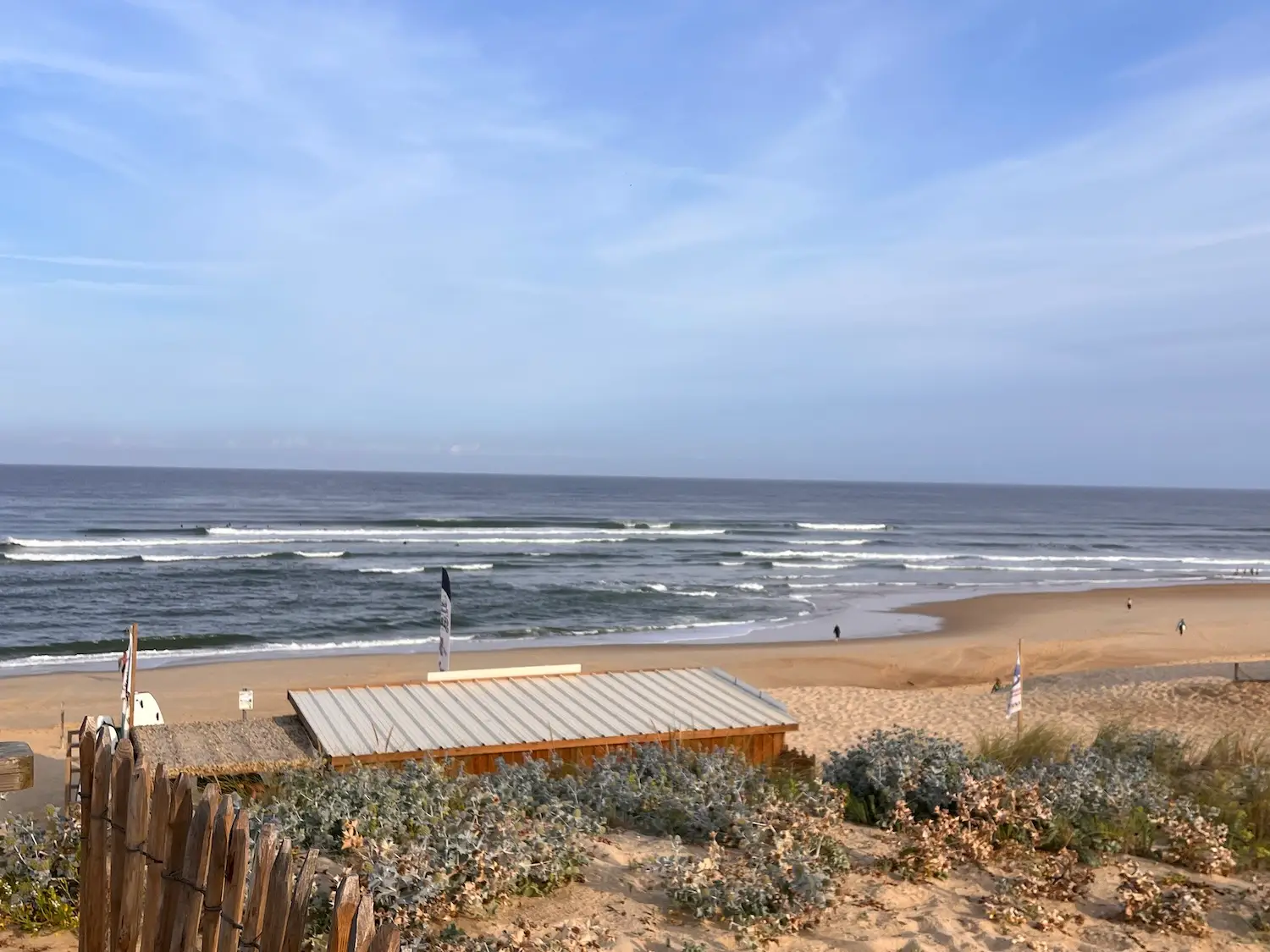
Experienced surfers: winter and big swells
Recommended period: December to March
Winter is the season for experienced surfers. Big swells arrive, with powerful, fast waves. You need to read the ocean, pick the right weather windows and be fit.
- Long-period swell: created by the big North Atlantic lows. It brings waves of 2 to 4 m and more.
- Offshore wind on some days: mostly in the morning, when the wind comes from the east.
- Few people in the water: but those who are there are good. Respect priority and find out about the spots.
Spots for experienced surfers:
- La Nord (Hossegor): big-wave spot that holds winter swells.
- Guéthary / Parlementia: offshore reef wave, committing on big swells.
- Belharra (tow-in): giant wave, for experts only.
Tips: get proper gear (5/4/3 wetsuit, booties, hood), train off-season (swimming, breath-hold), and never go out alone in winter. Check Windguru and Surf-Report before you go.
Summary of the best periods by level
| Level | Best period | Typical conditions |
|---|---|---|
| Beginner | May to September | Small waves, warm water, calm sea |
| Intermediate | April to June / Sept. to Nov. | More powerful waves, less crowded spots |
| Experienced | December to March | Big swells, committing sessions |
Surfing in France is possible all year round, as long as you choose the right time for your level. Conditions change fast: swell, tide, wind… Always check the forecast, find out about each spot and respect priority.